Materials & Finishes

Performance Begins
With Material Selection

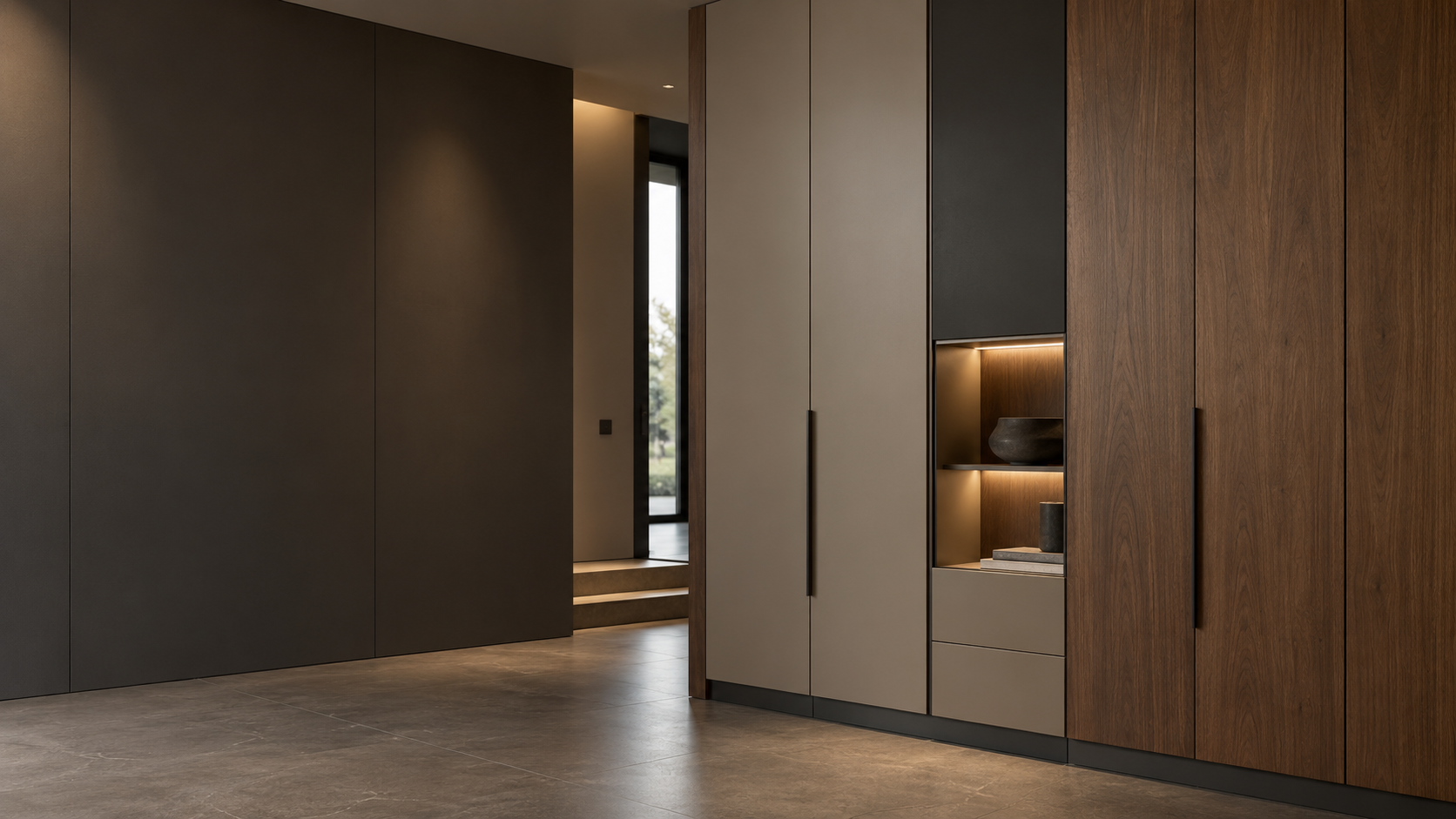
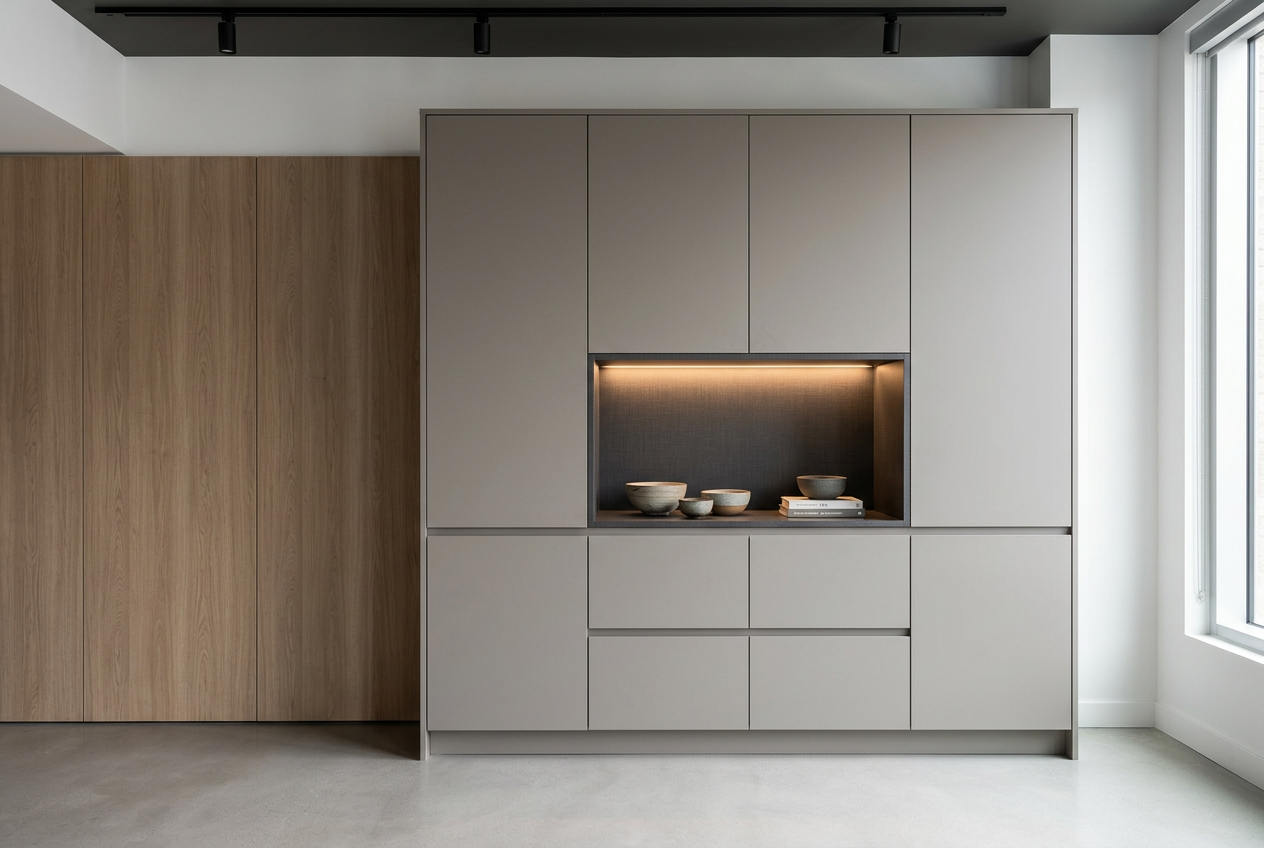
Substrates, surface materials, applied finishes, edge details, and hardware all influence how an interior system looks, performs, and is maintained. Maple Haus coordinates engineered panels, laminates, veneers, stained wood finishes, painted finishes, and specialty materials around the intended application, approved design, and project requirements.

Material Planning

The Right Material Depends
on the Application

Some interior requirements extend beyond conventional cabinet categories. Feature walls, integrated displays, entertainment areas, bars, and specialty built-ins introduce their own functional, material, and architectural considerations.

Maple Haus develops custom millwork around these project-specific requirements. Technical documentation, material coordination, and manufacturing planning help translate the design intent into finished elements that connect appropriately with the surrounding interior.

Intended Environment

The conditions of the room influence how substrates, surfaces, and applied finishes should be evaluated.

Use & Maintenance

Frequently handled surfaces require consideration of everyday wear, cleaning, access, and the expected level of use.

Design Coordination

Color, grain, texture, sheen, hardware, and adjoining materials are reviewed together to create continuity across the interior.

Fabrication & Consistency

Material choices must support the approved details, edge treatments, assembly methods, and production requirements of the project.

Material Families

Materials for Different Interior Applications

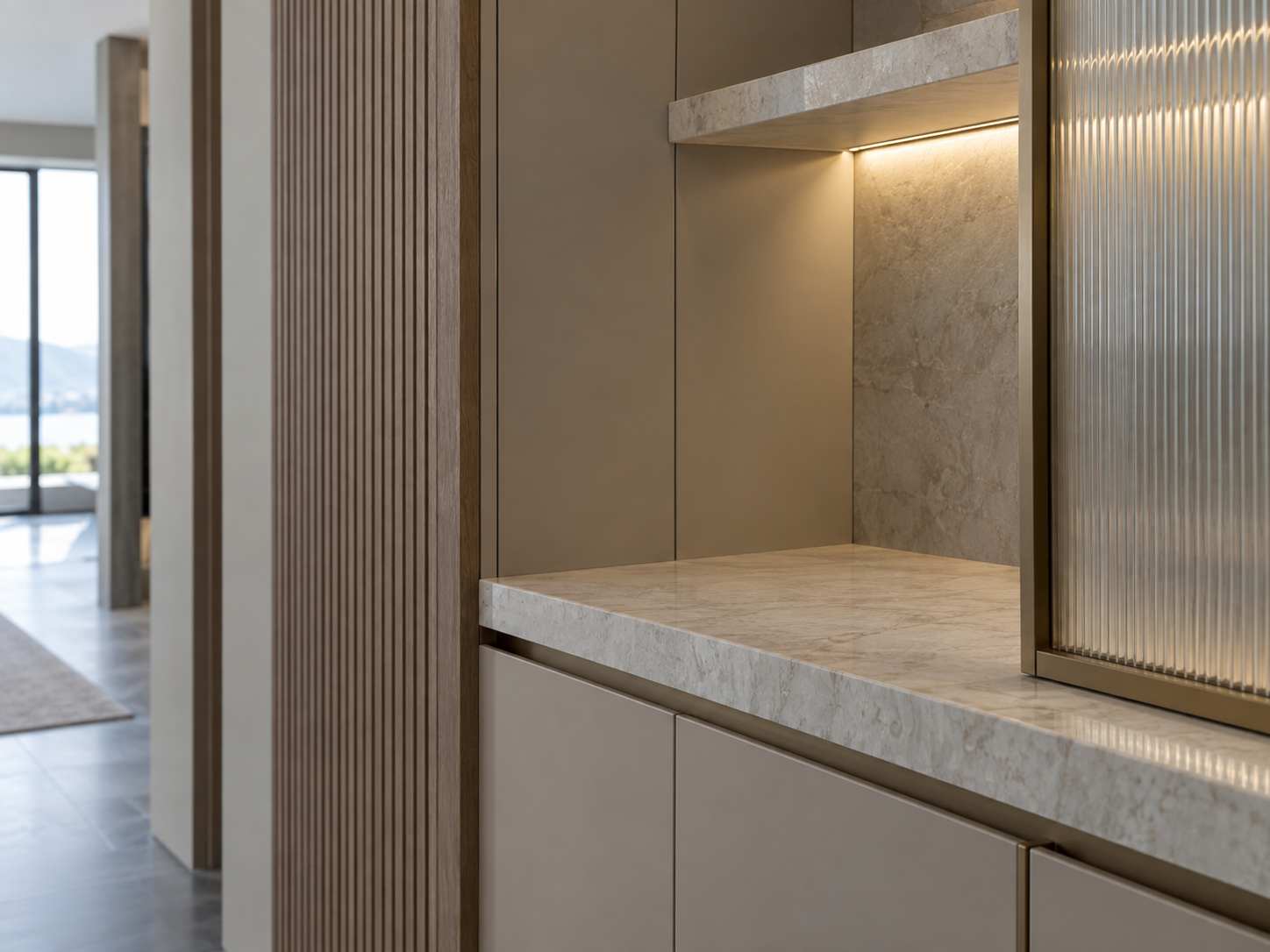
Interior systems can combine structural panel materials, decorative surfaces, natural veneers, and specialty selections. Each category introduces different considerations for fabrication, appearance, maintenance, and coordination with the surrounding interior.

Maple Haus reviews these materials in relation to the intended application and approved project requirements.

Engineered Panel Substrates

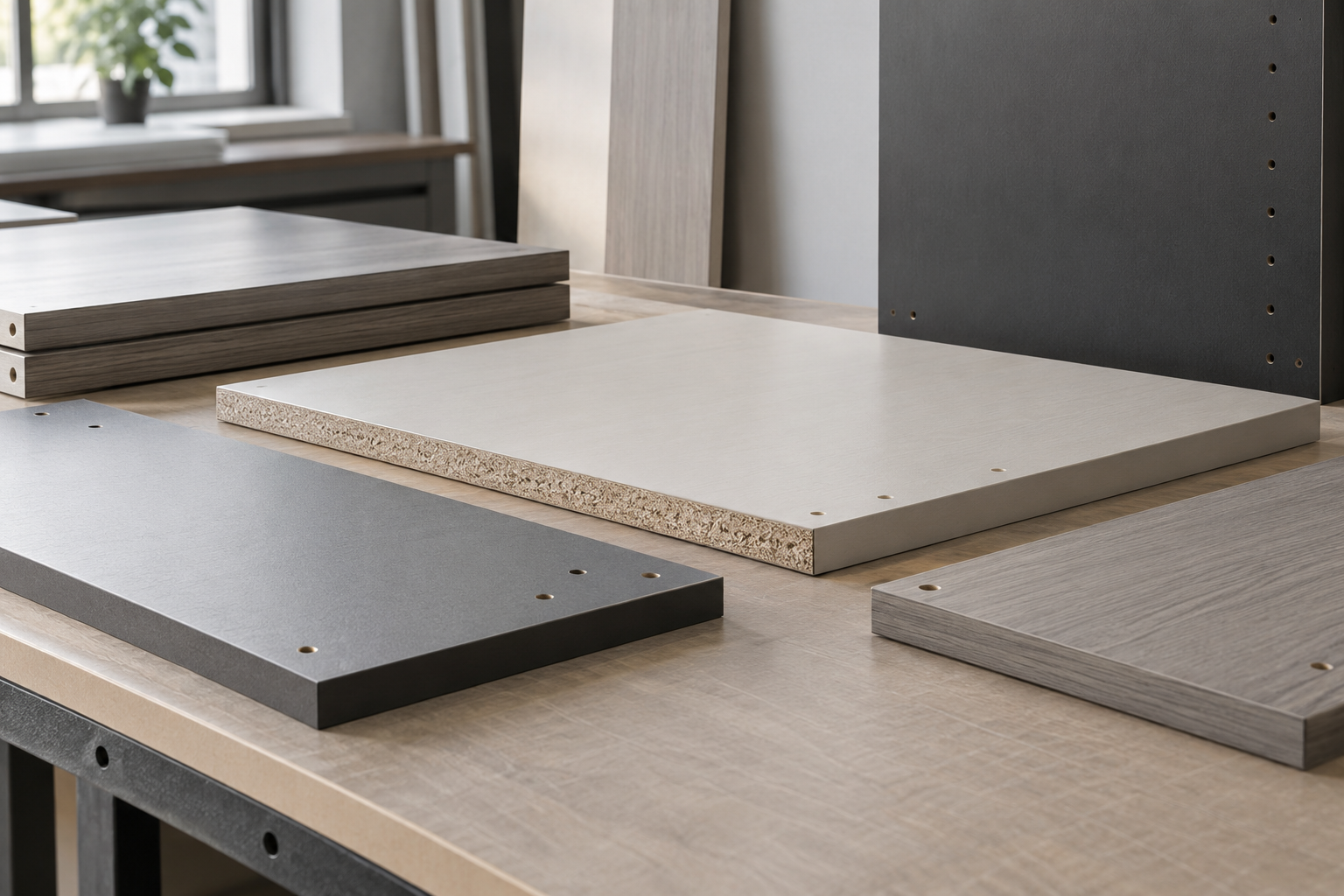
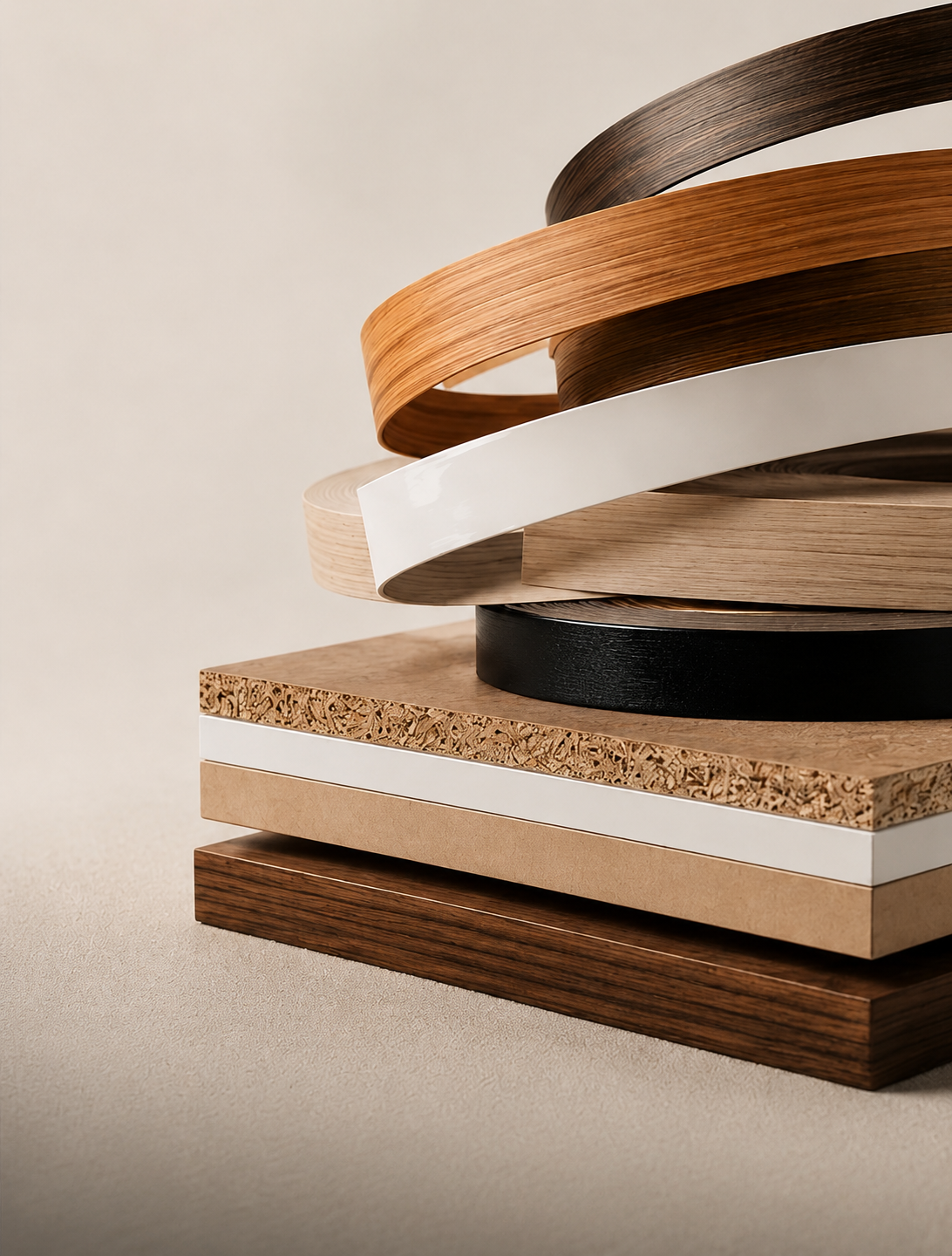
Panel substrates provide the structural foundation for cabinetry and millwork components. The appropriate panel construction is determined by the application, finish system, fabrication requirements, and surrounding conditions.

Laminated Surfaces

Laminates provide consistent finished surfaces across a range of colors, woodgrain appearances, textures, and visual directions. Selection should account for intended use, maintenance, edge treatment, and project quantities.

Wood Veneers

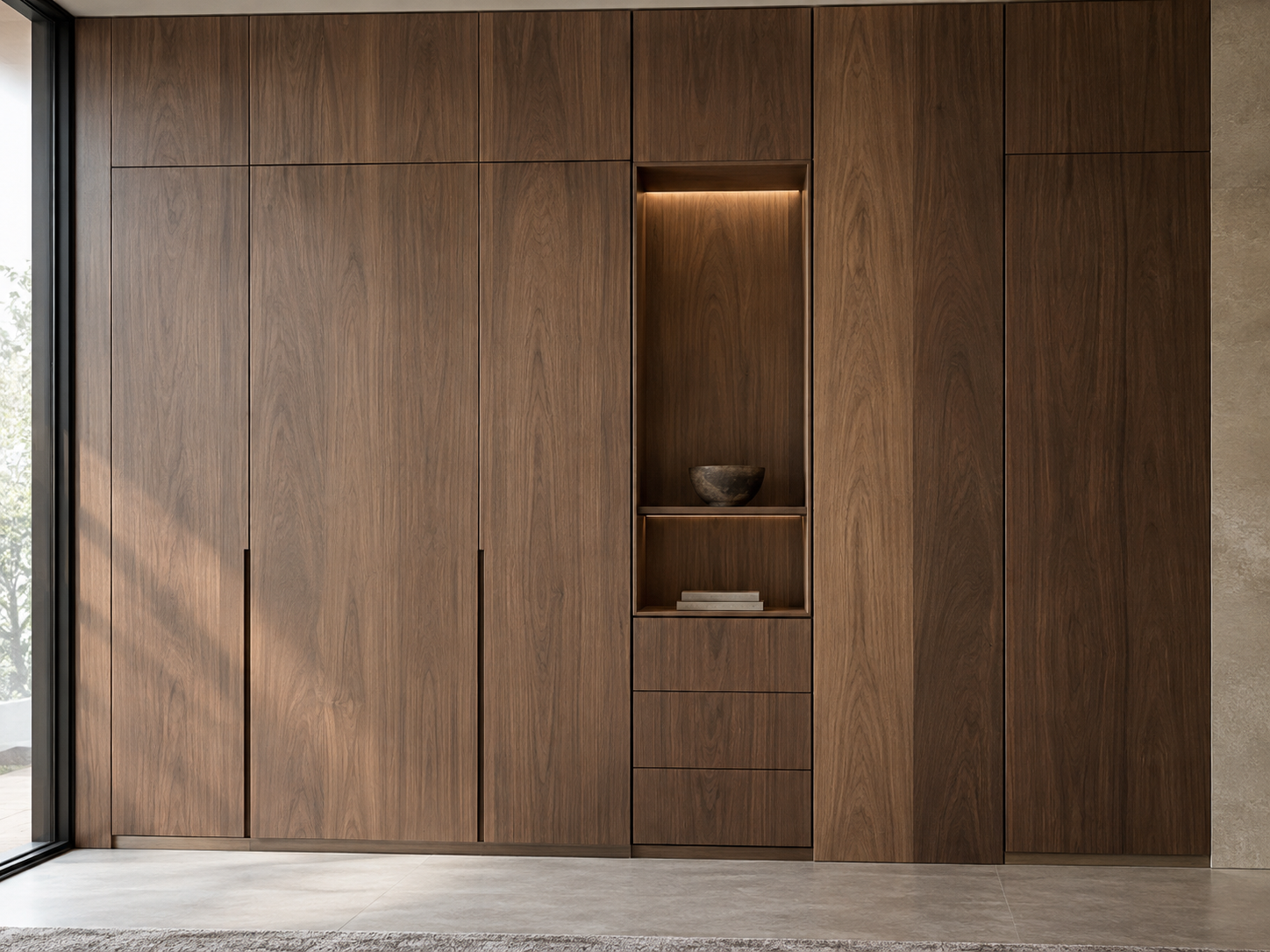
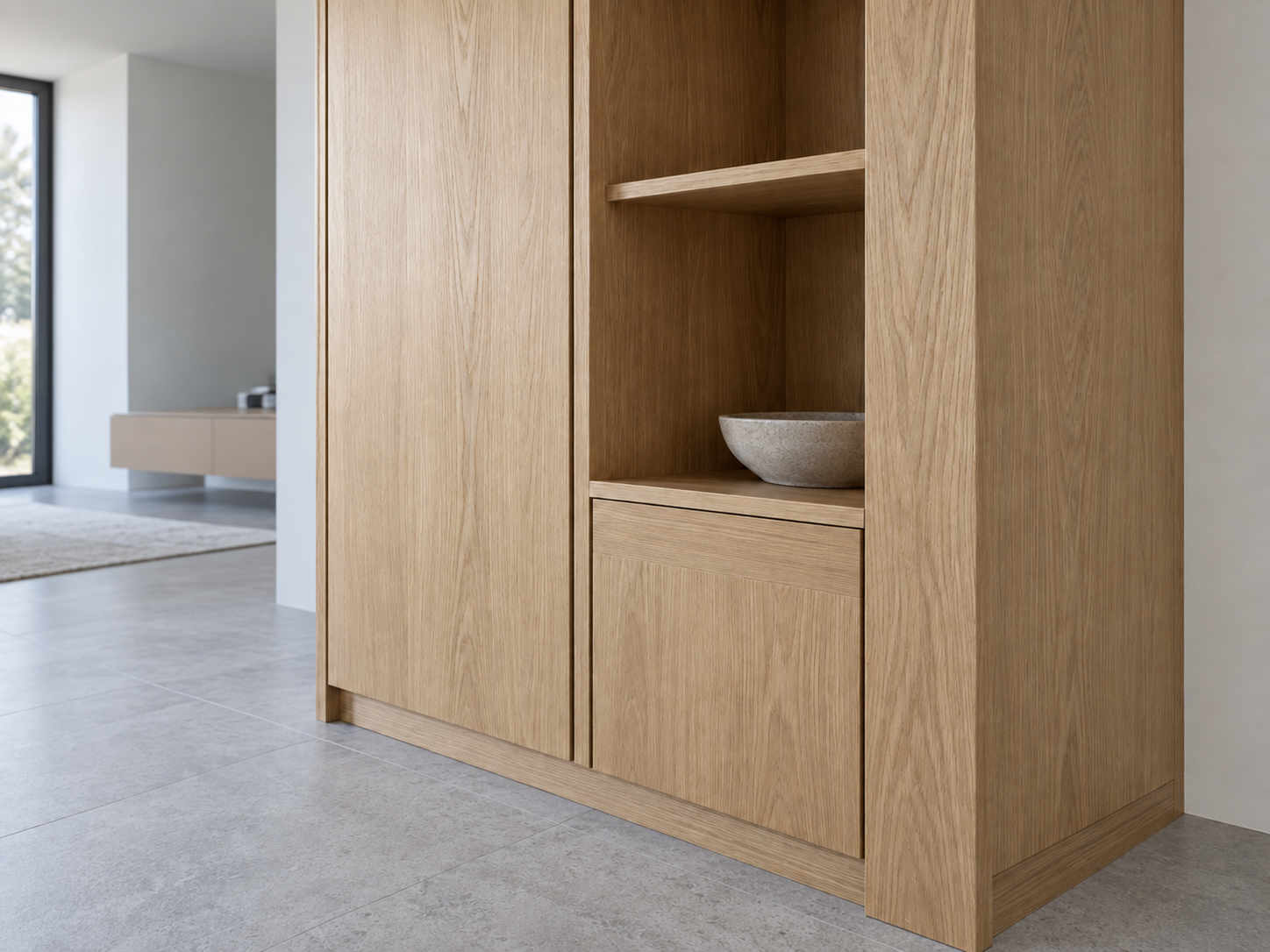
Wood veneers introduce natural grain, tone, and surface variation while supporting the precision and stability required for fabricated panels. Grain direction, panel sequencing, stain color, and clear finishing contribute to the final appearance.

Outdoor Cabinet Materials
& Work Surfaces

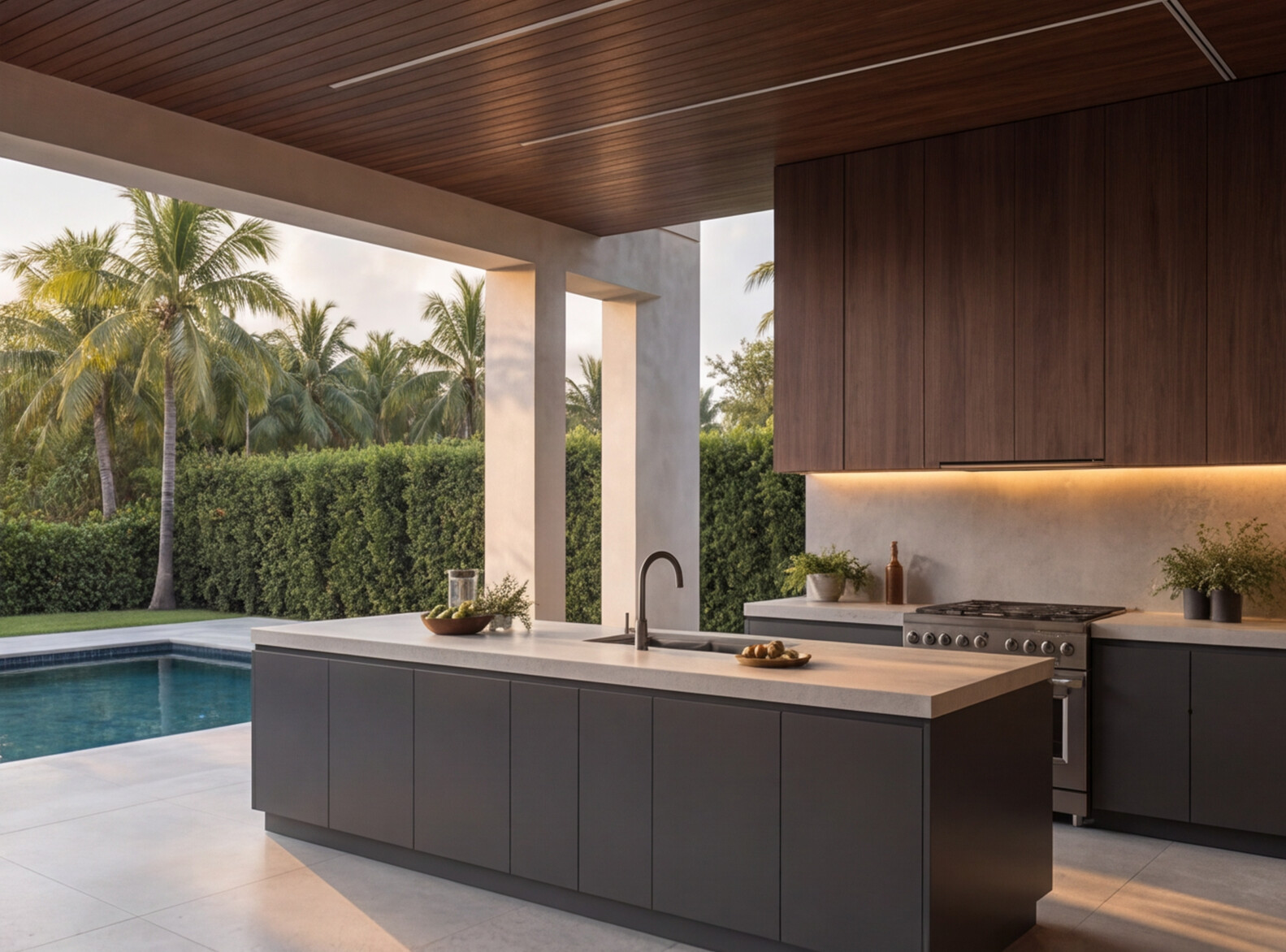
Outdoor kitchens require materials selected specifically for exposure to sunlight, humidity, rain, temperature changes, cleaning, and—where applicable—coastal conditions.

Exterior-rated polymers, compact panels, coated or corrosion-resistant metals, sintered surfaces, and application-appropriate natural stone may be evaluated according to the project’s exposure, fabrication requirements, and maintenance expectations.

Cabinet components, hardware, edges, work surfaces, appliance openings, and installation conditions must be considered together as part of the complete outdoor system.

Specialty Materials

Certain projects require materials or surface combinations beyond the principal categories. These selections are evaluated around fabrication compatibility, detailing, performance expectations, and integration with adjoining finishes.

Applied Finishes

How Finishing Changes the Material

Applied finishes influence color, grain visibility, sheen, surface character, and maintenance. The selected finish must be considered alongside the wood species, veneer, substrate, fabrication method, and intended application.

Samples establish the approved combination before fabrication begins, since the same stain or coating can appear different across materials and lighting conditions.

Clear Wood Finishes

Clear finishes protect the surface while retaining the natural grain, tone, and variation of the wood or veneer. The selected coating and sheen can subtly influence the material’s final appearance.
Stained Wood & Veneer

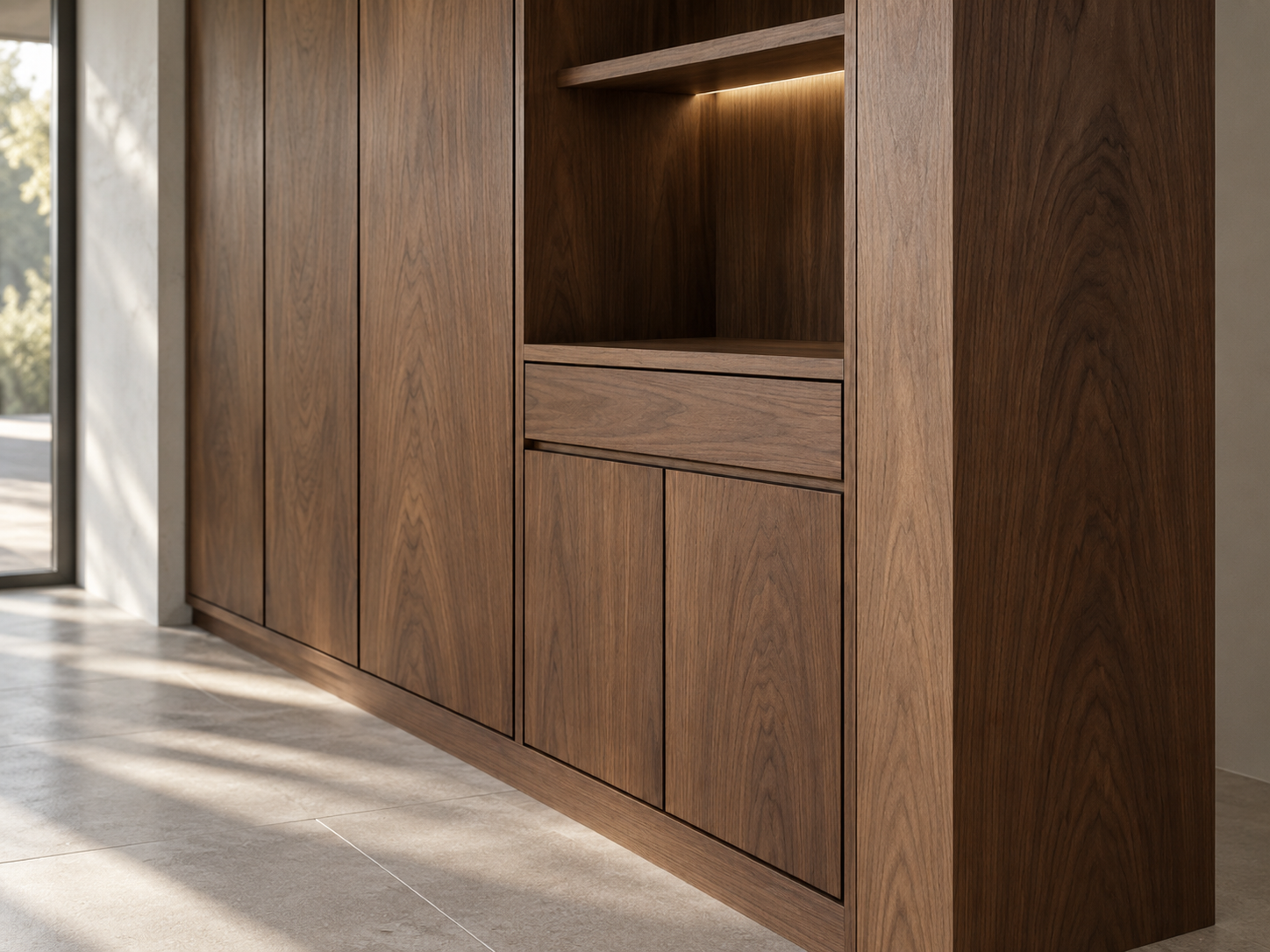
Stain modifies the color of wood while allowing its grain and natural characteristics to remain visible. Wood species, veneer cut, surface preparation, stain application, and protective topcoat all contribute to the finished result.
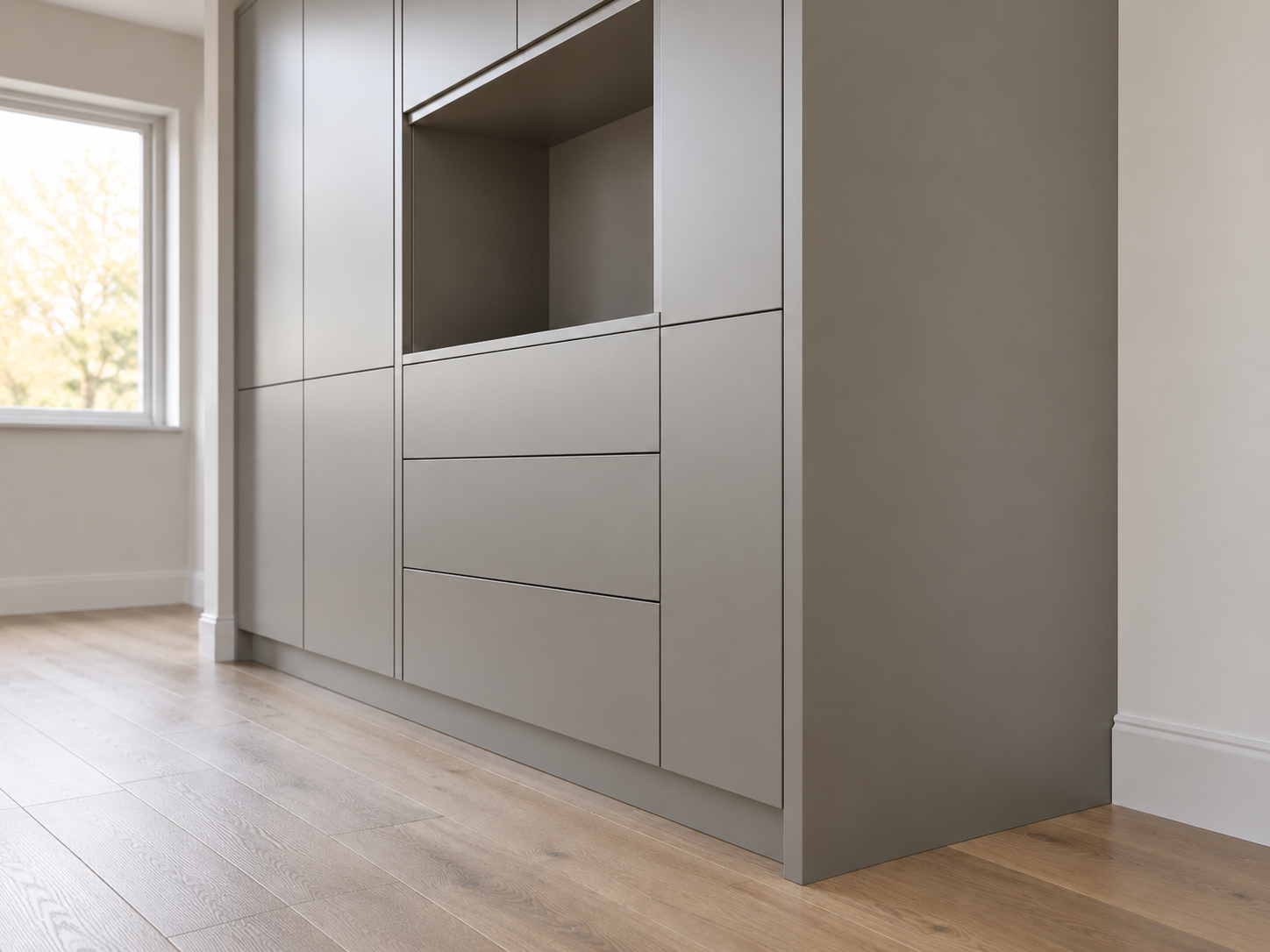
Opaque Painted Finishes

Opaque painted finishes provide a uniform color treatment that conceals the underlying grain. These finishes require properly prepared paint-grade components, controlled application, and coordinated edge and joint detailing.
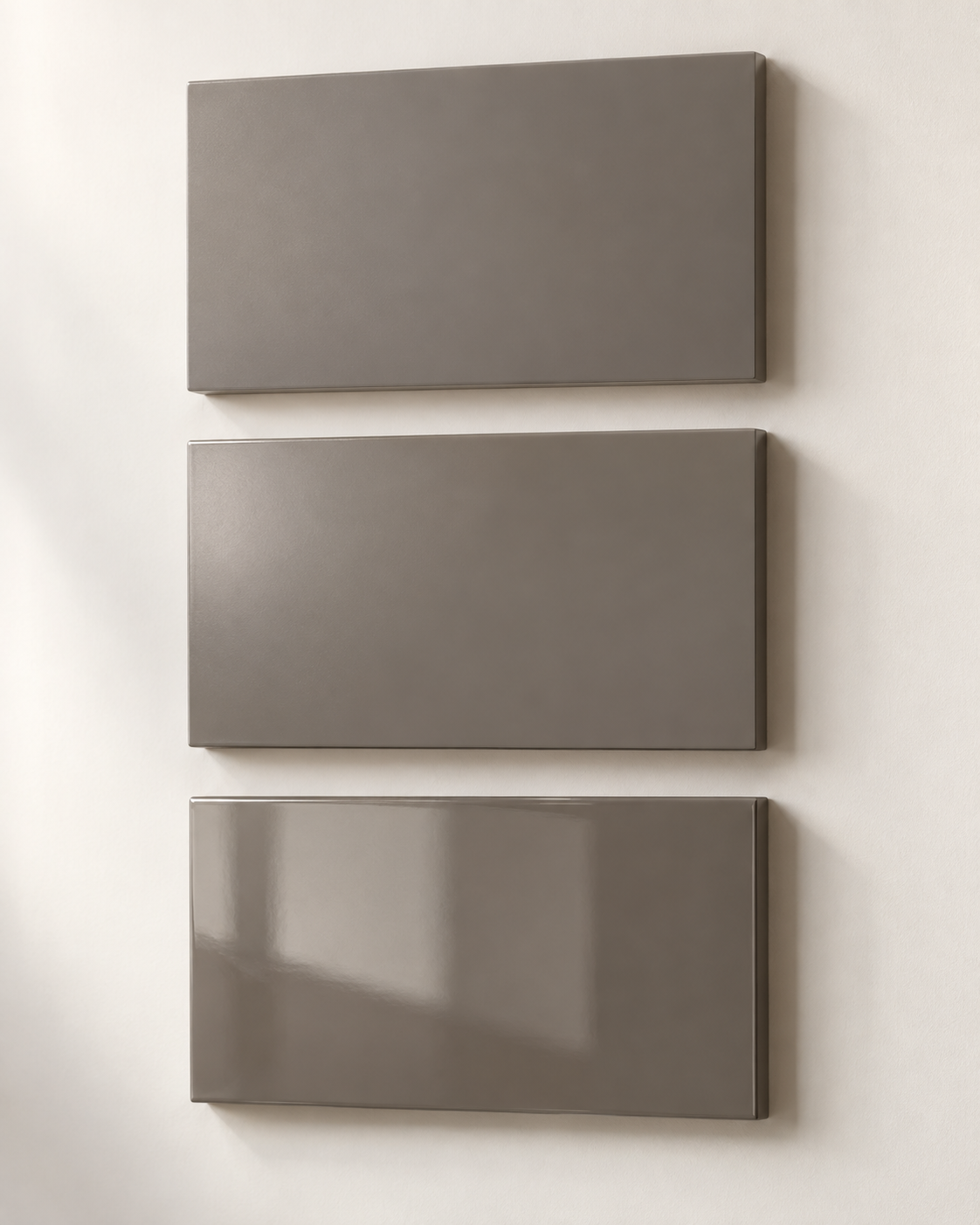
Sheen & Protective Topcoats

Matte, satin, and higher-sheen finishes affect reflectivity, color perception, maintenance, and the visibility of surface contact. Protective topcoats are selected according to the finish system and intended application.
Material Detailing

Material Decisions
Extend Beyond the Surface

The finished appearance of cabinetry and millwork depends on how materials resolve at edges, joints, openings, and adjoining surfaces. These details must be coordinated with the selected material, fabrication method, hardware, and installation conditions.

For outdoor applications, exposed edges, seams, hardware, equipment openings, and mounting conditions require additional consideration based on their level of weather exposure.

Edge Treatment

Exposed edges are detailed according to the selected substrate and surface material, creating a finished transition around doors, panels, shelves, and work surfaces.

Grain & Pattern Direction

Woodgrain, veneer, and directional surface patterns are coordinated across components to support the intended visual alignment without obscuring individual panel divisions.

Joints & Reveals

Panel joints, shadow gaps, and cabinet reveals define how separate components meet while accounting for fabrication and installation requirements.

Interior & Exterior Coordination

Cabinet interiors, visible surfaces, and exposed end panels can use different materials while maintaining a coordinated appearance and appropriate performance.

Hardware & Openings

Material thickness, panel construction, and edge conditions are reviewed alongside hinges, drawer systems, pulls, fixtures, and equipment openings.

Adjacent Material Transitions

Connections with countertops, walls, flooring, metalwork, glass, tile, and other surrounding finishes are considered as part of the completed assembly.

Material Review

Confirm the Finish Before Production

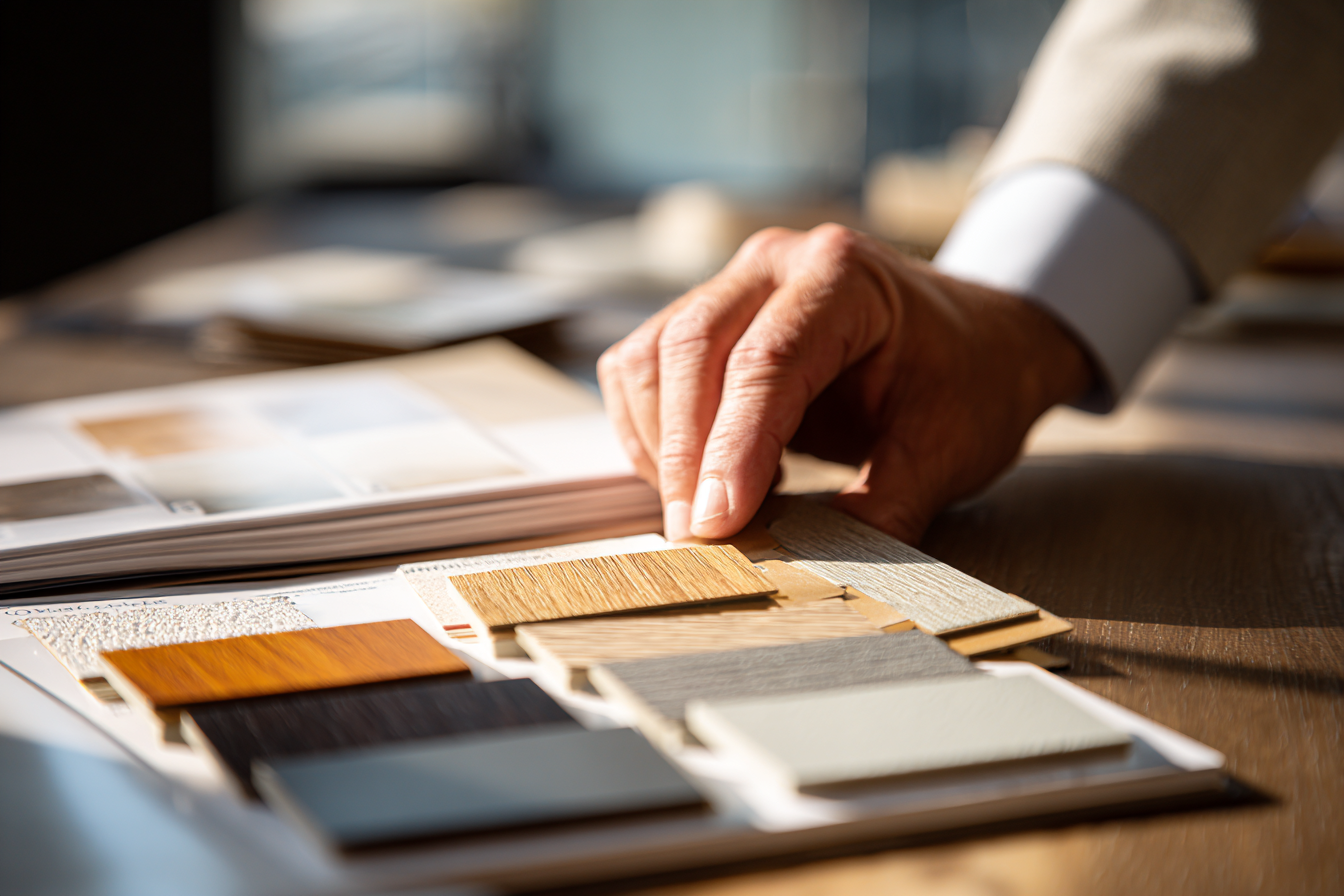
Material and finish selections can be reviewed through manufacturer samples, project-specific finish samples, and mockups when required. These references help establish the approved color, grain, texture, sheen, edge treatment, and material combination before fabrication begins.

Once approved, the selected samples and project documentation provide a consistent reference for production and quality-control review.

Millwork Partner for Interior Designers
Start a Project

Tell Us About Your Project.

Share your project type, scope, location, and timeline. Our team will review the information and connect with you to discuss requirements and next steps.

Project Inquiry / Request Project Pricing form
Scroll to Top