

Bespoke cabinet design and interior planning are often treated as separate scopes. Interior layouts are developed first, and cabinets are introduced later as a supporting element.
In practice, this separation creates friction. Interiors perform best when bespoke cabinet design and interior systems are developed together from the start. When spatial planning, materials, and built in elements are aligned early, interiors function more consistently and age more predictably over time.
This integrated approach forms the foundation of our work.
Why Bespoke Cabinet Design and Interior Planning Should Be Developed Together
Interior environments are not collections of isolated rooms. They operate as systems of circulation, storage, material transitions, and daily use.
Bespoke cabinets play a structural role within these systems. They organize space, define function, and integrate storage directly into the architecture. When cabinets are designed late in the process, they are often forced to adapt rather than lead.
Developing bespoke cabinet design alongside interior planning allows for:
- More efficient use of space
- Clear alignment across surfaces and planes
- Integrated storage and functional solutions
- Fewer compromises during fabrication and installation
- Improved long term performance
Bespoke Cabinets as the Backbone of Interior Systems
Bespoke cabinets are not furniture. They are permanent architectural components that interact directly with walls, floors, lighting, and mechanical systems.
Because of this, cabinet design must be considered at the same level as layout and material selection. Proportion, alignment, and tolerances influence not only how an interior appears, but how it functions and wears over time.
When bespoke cabinets are treated as the backbone of interior systems, spaces feel resolved rather than assembled.
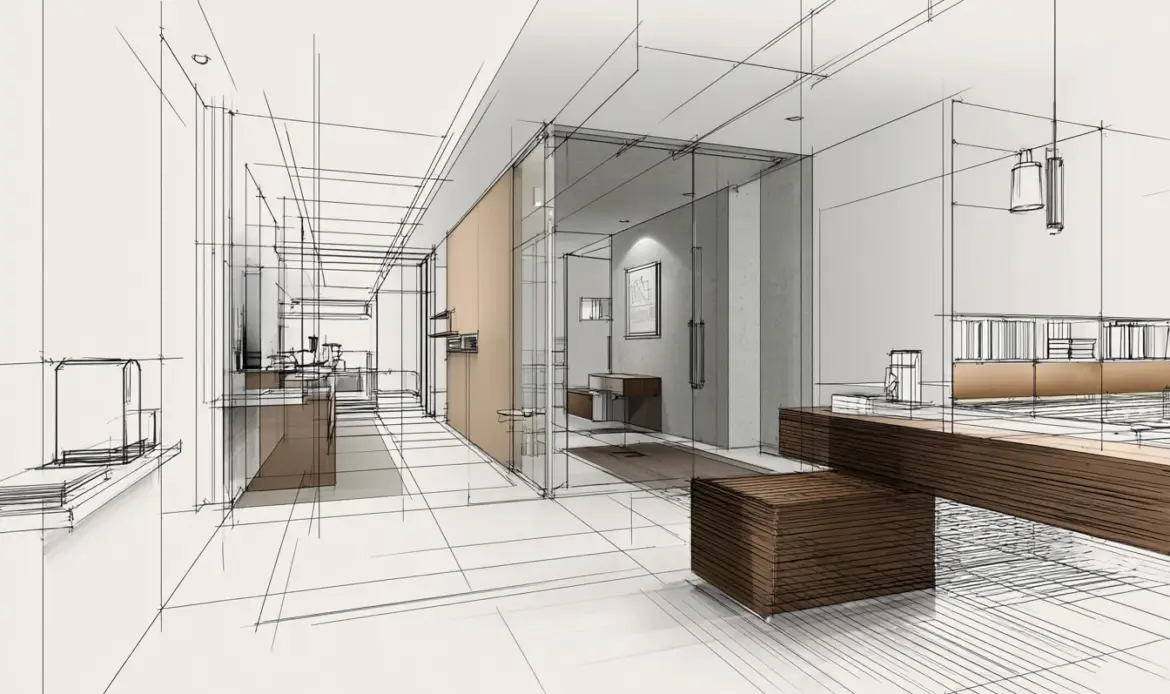
Interior Design as a Technical Discipline
Interior design decisions are often framed as aesthetic preferences. In reality, they are technical decisions with long term consequences.
Material selection affects durability and maintenance. Finish systems affect consistency and aging. Joinery and detailing affect stability and alignment. Coordination affects how smoothly a project moves from design to installation.
Approaching bespoke cabinet design and interior planning as a technical discipline creates clarity throughout the process. Design intent translates more accurately into fabrication, reducing revisions and uncertainty during execution.
From Bespoke Design to Fabrication Without Disconnect
A common challenge in interior projects is the gap between design intent and fabrication reality. Drawings may appear resolved, but details often shift once production begins.
Our process treats bespoke cabinet design and interior planning as part of a continuous workflow. Design, engineering, and fabrication are developed together, with each decision evaluated for how it will be built, installed, and used over time.
This approach supports:
- Clear coordination with architects and interior designers
- Predictable fabrication outcomes
- Reduced friction during installation
- Greater confidence for project teams
A System Based Approach to Bespoke Cabinet Design
Designing interiors as systems allows each decision to support the next. Layout informs cabinet design. Cabinets inform material selection. Materials inform detailing. Detailing informs fabrication.
When bespoke cabinet design is aligned with the broader interior system from the beginning, the result is an environment that performs consistently and feels intentional throughout its lifecycle.
Frequently Asked Questions
What does bespoke cabinet design mean?
Bespoke cabinet design refers to cabinets that are designed specifically for a space, considering layout, function, materials, and integration with the overall interior system rather than relying on predefined or modular solutions.
How is bespoke cabinet design different from standard cabinet solutions?
Standard cabinet solutions are typically limited by fixed dimensions and configurations. Bespoke cabinets are designed to align precisely with the interior layout, allowing for better spatial efficiency, integration, and long term performance.
Can a bespoke designer support full interior planning?
Yes. A bespoke designer approaches interiors holistically, considering how cabinets, materials, and spatial organization work together as a system rather than as isolated elements.
Why should cabinets be designed early in an interior project?
Designing cabinets early allows for better coordination with architecture, lighting, and mechanical systems. Early planning reduces compromises during fabrication and installation.
Who benefits from a bespoke cabinet and interior systems approach?
Architects, interior designers, developers, builders, and clients benefit from improved coordination, clearer expectations, and more predictable outcomes when cabinets and interior systems are developed together.
Continue the Conversation
If you are planning an interior project and want to explore how bespoke cabinet design can be integrated as part of a broader interior system, we welcome the conversation.
Our work begins early, with clarity around layout, materials, and execution.